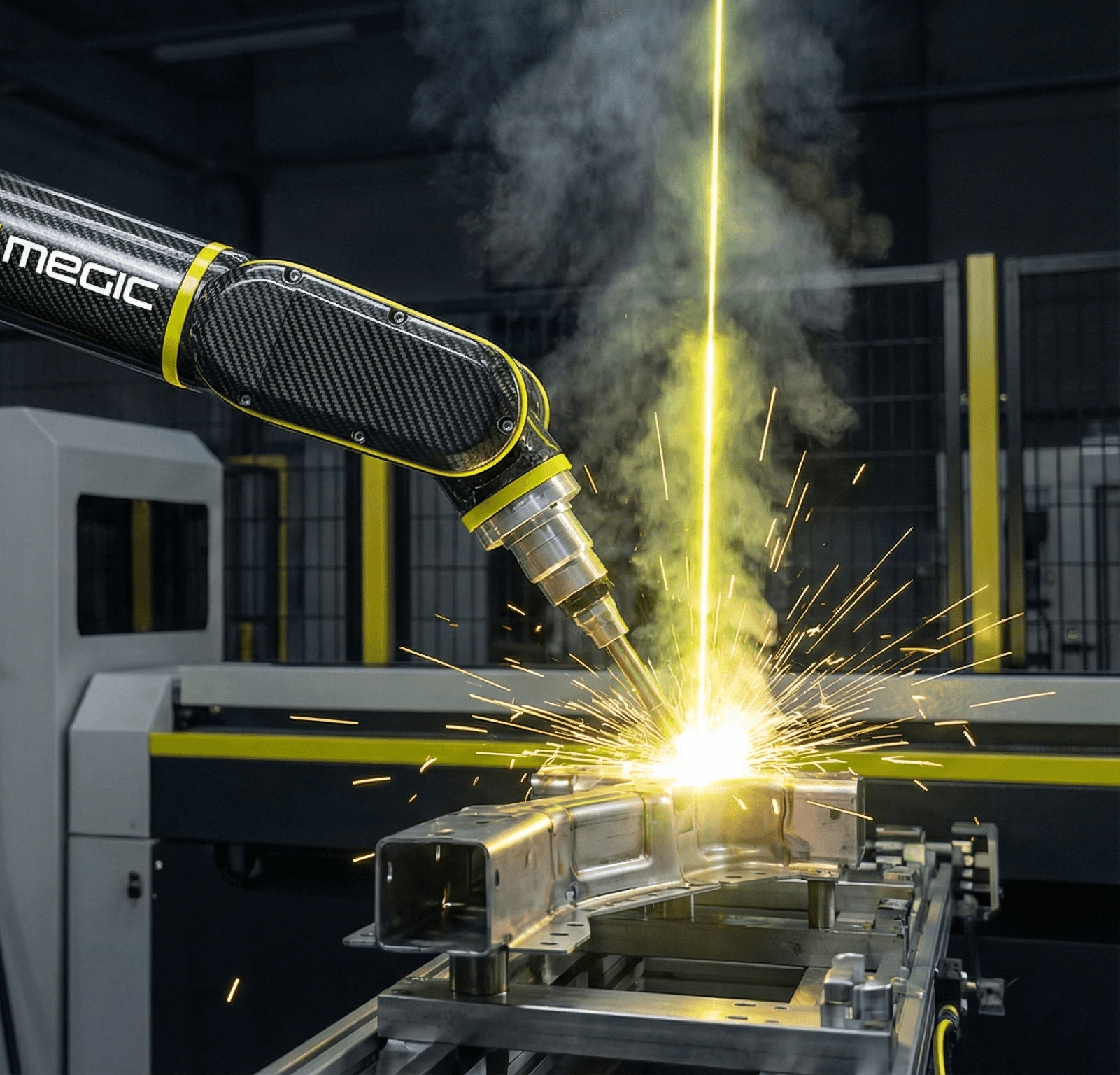
BRAND IDENTITY
2024
Redefining Industrial Innovation
MEGIC is a precision robotics company specializing in industrial automation and laser welding technology. Despite strong engineering credentials and a growing client base in manufacturing, the company's visual identity hadn't evolved since its founding in 2018.
The existing logo was a generic wordmark with a mechanical cog icon—visually indistinguishable from dozens of competitors in the industrial automation space. More critically, MEGIC's leadership team was preparing to expand into new European markets and needed a brand that could compete at international trade shows where first impressions determine whether prospects stop at your booth or walk past.
The disconnect between their technical sophistication and visual presentation was creating a credibility gap. As the CEO put it: "Our robots are cutting-edge, but our brand looks like it's from the 1990s."
Project Details:
Role: Brand Identity Designer (contracted)
Timeline: 3 months (July - Sept 2024)
Scope: Logo system, brand guidelines, product naming architecture, trade show applications
Deliverables: Logo suite, color system, typography guidelines, 42-page brand book, product catalog redesign
The Objectives:
Modernize perception: Create a visual identity that matches the company's technical innovation
Increase memorability: Design a distinctive mark that stands out in a crowded industrial sector
Enable scalability: Build a flexible system that works across digital platforms, physical products, and trade environments
Clarify product offering: Restructure the naming system to help customers navigate the product line
I began by auditing 15 competitors in the industrial robotics sector (including Universal Robots, KUKA, ABB, Fanuc, and smaller European players). Pattern identified: 85% used blue color palettes, 70% incorporated circular/gear iconography, and nearly all relied on conservative sans-serif typography.
The visual language of the entire sector screamed "we're serious and reliable" but failed to communicate innovation or differentiation. This presented an opportunity: a modern, distinctive identity could immediately set MEGIC apart visually before a single word was spoken.
Stakeholder Workshops
Conducted two half-day workshops with MEGIC's leadership team (CEO, CTO, Head of Sales) and 3 senior engineers. Goals: understand brand perception internally, identify differentiators, and define brand values.
Key insights from workshops:
Engineering team took pride in customization capabilities—every system is tailored to client needs, not off-the-shelf
Sales team felt existing materials looked "cheap" compared to larger competitors with bigger budgets
Leadership identified three core values: Precision, Adaptability, Innovation
Everyone agreed the brand needed to feel "more tech, less metal"—closer to software companies than traditional manufacturing
Customer Interviews
Interviewed 5 existing clients (manufacturing operations managers) to understand external perception. Three described MEGIC as "reliable but forgettable." When asked to recall the logo, only 1 could describe it accurately. This confirmed the memorability problem wasn't just internal perception.
Strategic Direction
Based on research, I developed a positioning strategy that would differentiate MEGIC from the "blue sea" of conservative competitors:
Brand Positioning: "Precision robotics for adaptive manufacturing"—emphasizing customization and flexibility over raw power
Visual Strategy: Break category conventions with unexpected color (avoid blue), embrace geometric minimalism (not organic/mechanical), and create a modular identity system that mirrors the modular nature of their products
Tone: Confident and technical, but accessible—not cold or overly corporate
The Logo
I explored different conceptual directions in initial sketches:
Direction 1: Abstract "M" - Geometric letterform construction using parallel lines to suggest precision and modularity. This direction felt contemporary and distinctive.
Direction 2: Robotic Arm Silhouette - Literal visualization of the product. Feedback: too predictable, looked dated despite modern execution.
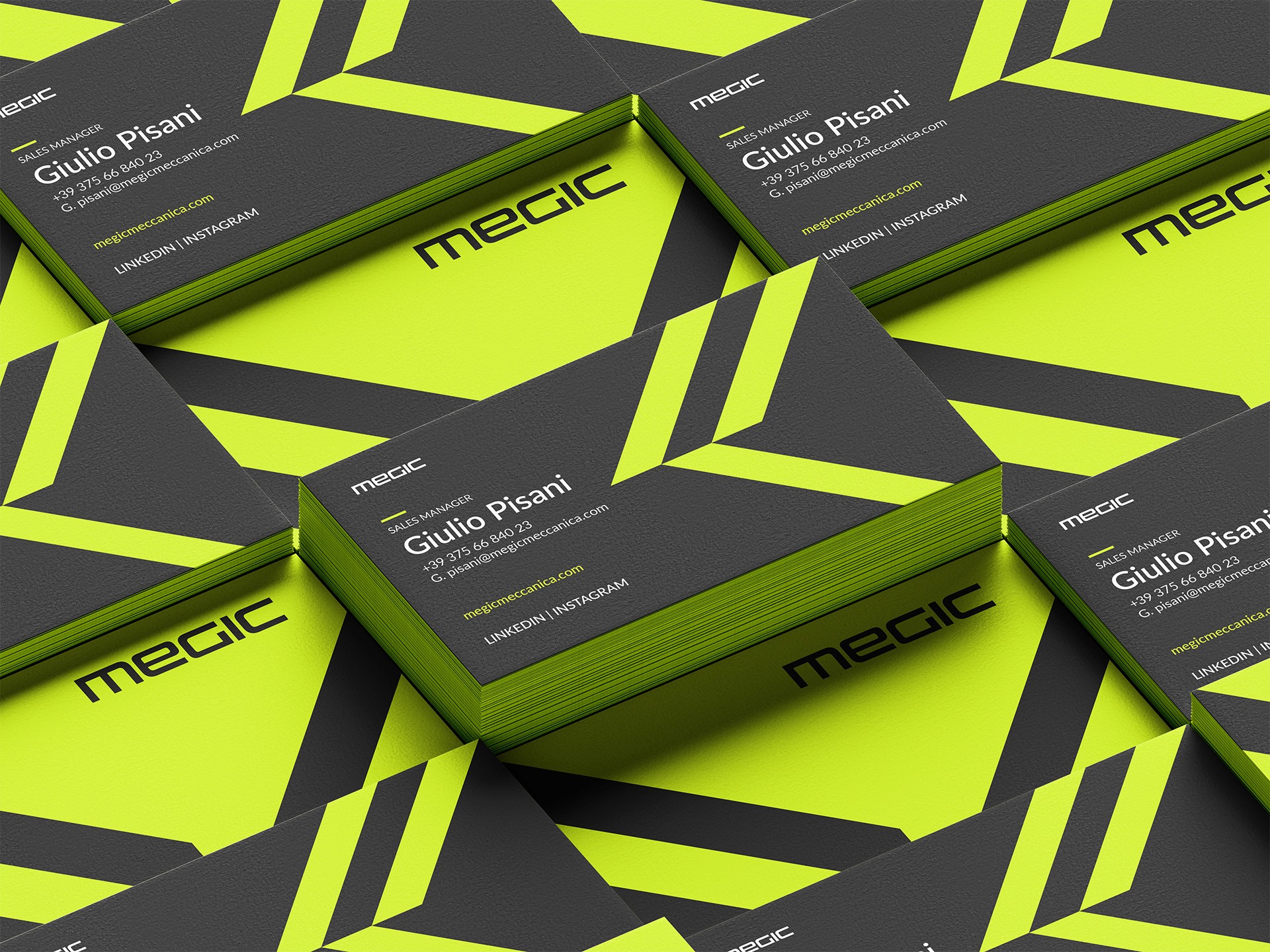
I then tried to blend both, creating the final mark uses precisely calibrated lines that create negative space, suggesting both movement and structure and recalling the vertex part of an "M". The lines can be read as trajectories, precision paths, or modular components—all relevant to the brand.
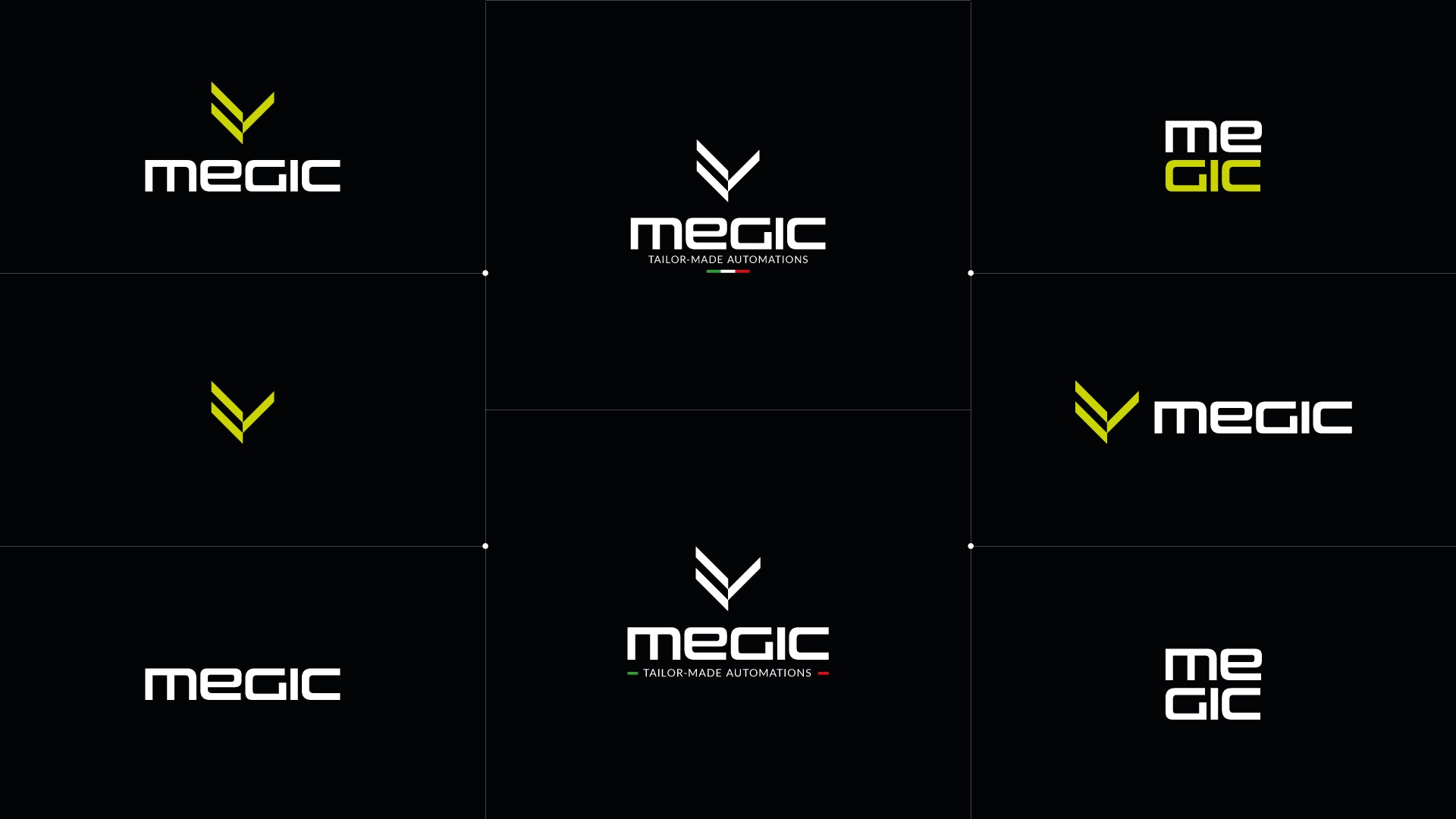
Logo variations created:
Primary horizontal lockup (logo + wordmark)
Stacked vertical version for square applications
Icon-only symbol for favicons and product badges
Monochrome versions for technical documentation
Outlined version for embroidery on workwear
Color Strategy
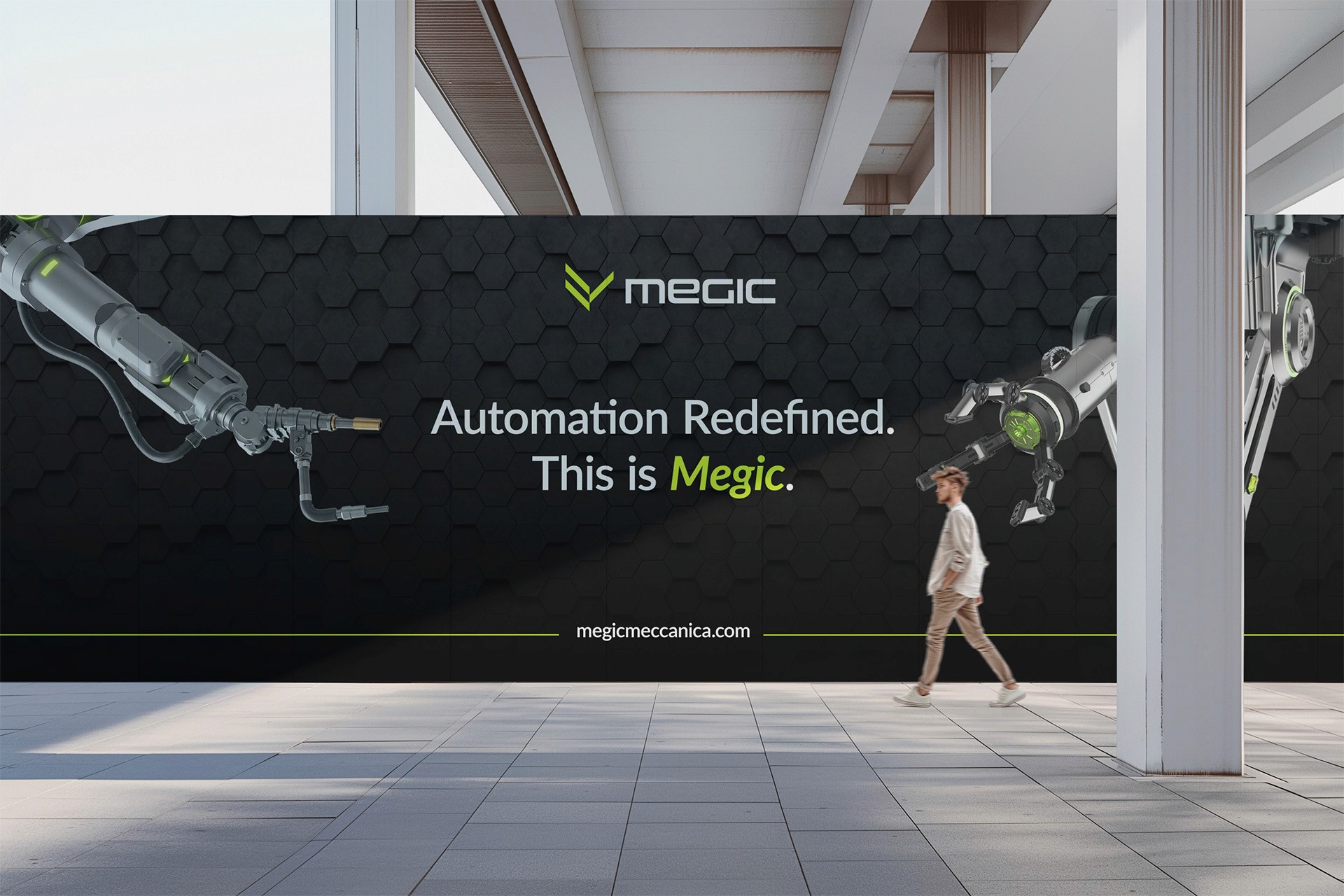
The competitive audit revealed that breaking from blue was essential for differentiation. I selected Electric Lime (#CCFF00) as the primary brand color for several strategic reasons:
High visibility: Critical for trade show environments where you're competing for attention
Category disruption: Unexpected in industrial sector = memorable
Energy association: Connotes innovation and forward-thinking
Safety correlation: Lime is already used in industrial contexts for high-visibility, creating subconscious trust
Paired Electric Lime with Deep Space Black (#0A0A0A) for grounding and Pure White for contrast. The stark palette creates unmistakable brand recognition and works effectively in both digital and physical applications.
Typography System
Selected Uniwars as the primary typeface for its geometric precision, excellent legibility across sizes, and extensive weight range (7 weights available). Uniwars has a technical, but approachable quality that aligned perfectly with brand positioning.
Avoided overly futuristic or decorative typefaces. The identity needed to feel current, not trendy, appropriate for a brand building industrial equipment with 10+ year lifecycles.
Typography applications:
Uniwars 65 Bold: Headlines and product names
Uniwars 55 Roman: Body copy and technical specifications
Uniwars 45 Light: Supporting text and captions
Product Naming Architecture
MEGIC's previous product naming was alphanumeric (MG-400, MG-600R, MG-1200X). Customer feedback indicated this was difficult to remember and didn't communicate positioning or capability.
I developed a tiered naming system that creates narrative and hierarchy:
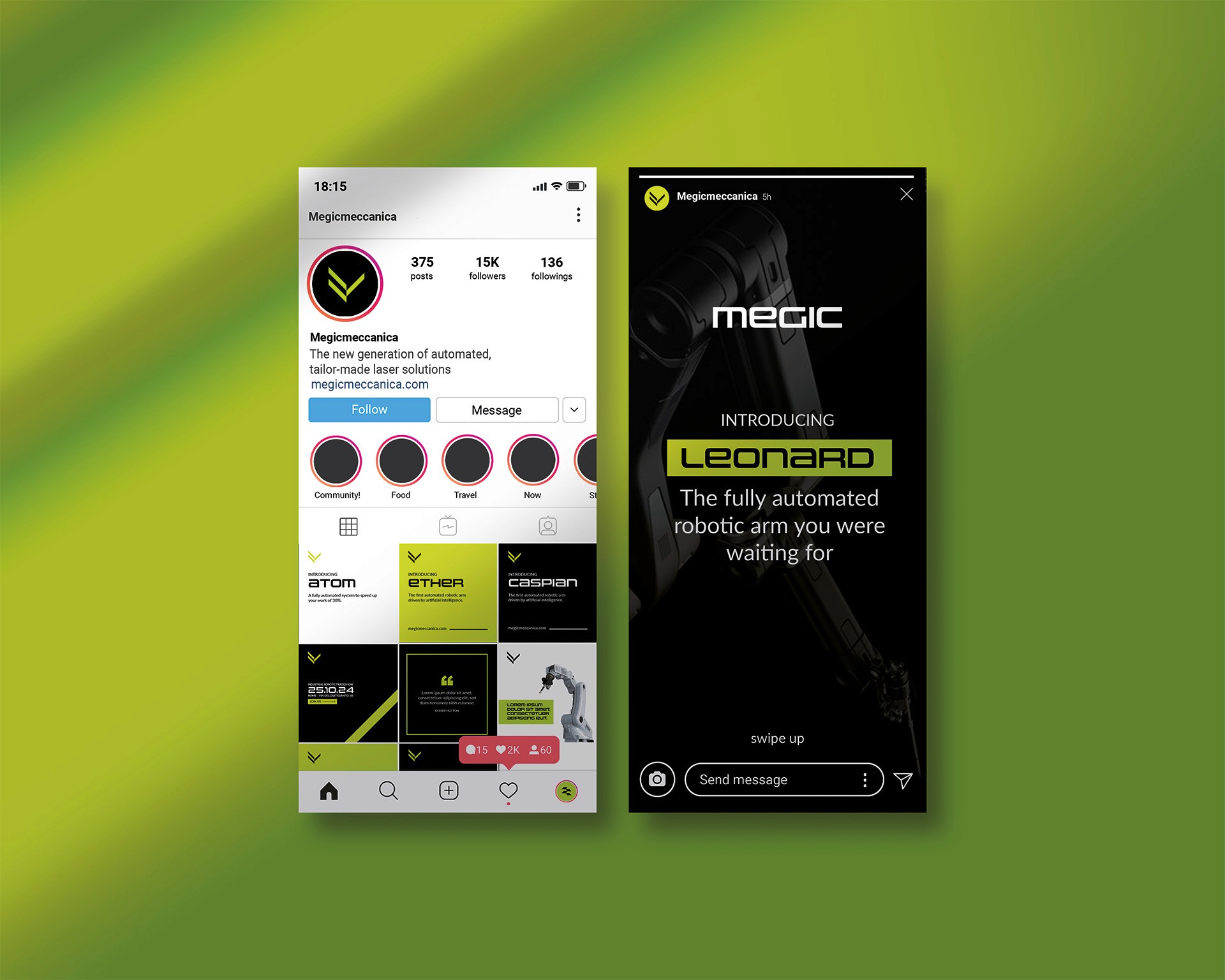
Premium Tier - Ether Series: Ultra-lightweight collaborative robots for precision assembly (Ether 4, Ether 6)
Core Tier - Caspian Series: Mid-payload workhorse robots for flexible manufacturing (Caspian 8, Caspian 12)
Heavy-Duty Tier - Axiom Series: High-payload systems for demanding applications (Axiom 20, Axiom 35)
The poetic naming creates differentiation while numbers still indicate payload capacity in kilograms. This hybrid approach satisfied both marketing (memorable names) and engineering (technical specificity).
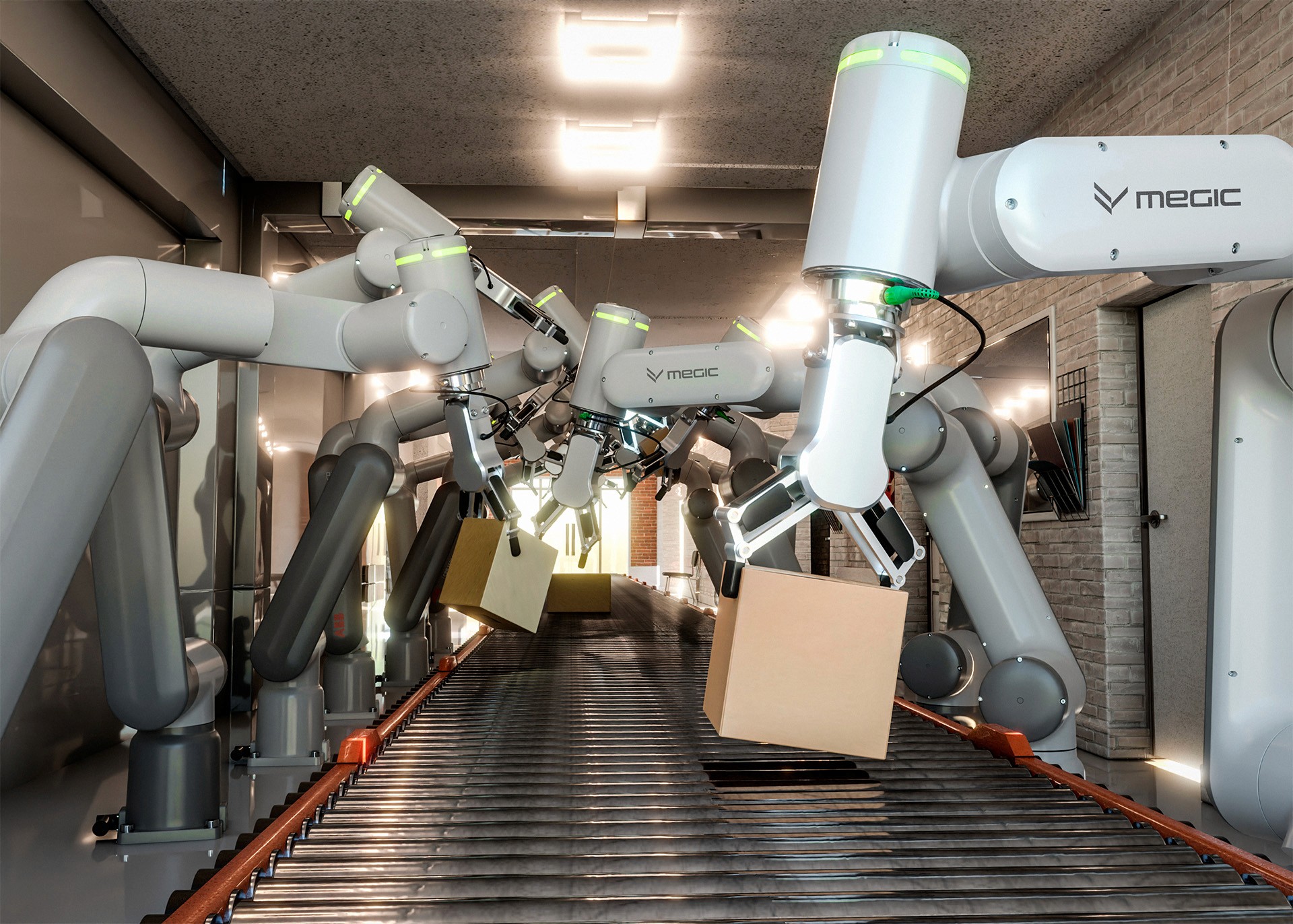
The rebrand launched in three phases over 6 weeks:
Phase 1: Digital (Week 1-2) - Updated website, social media profiles, email signatures, and digital collateral. Immediate visibility to existing customers and online prospects.
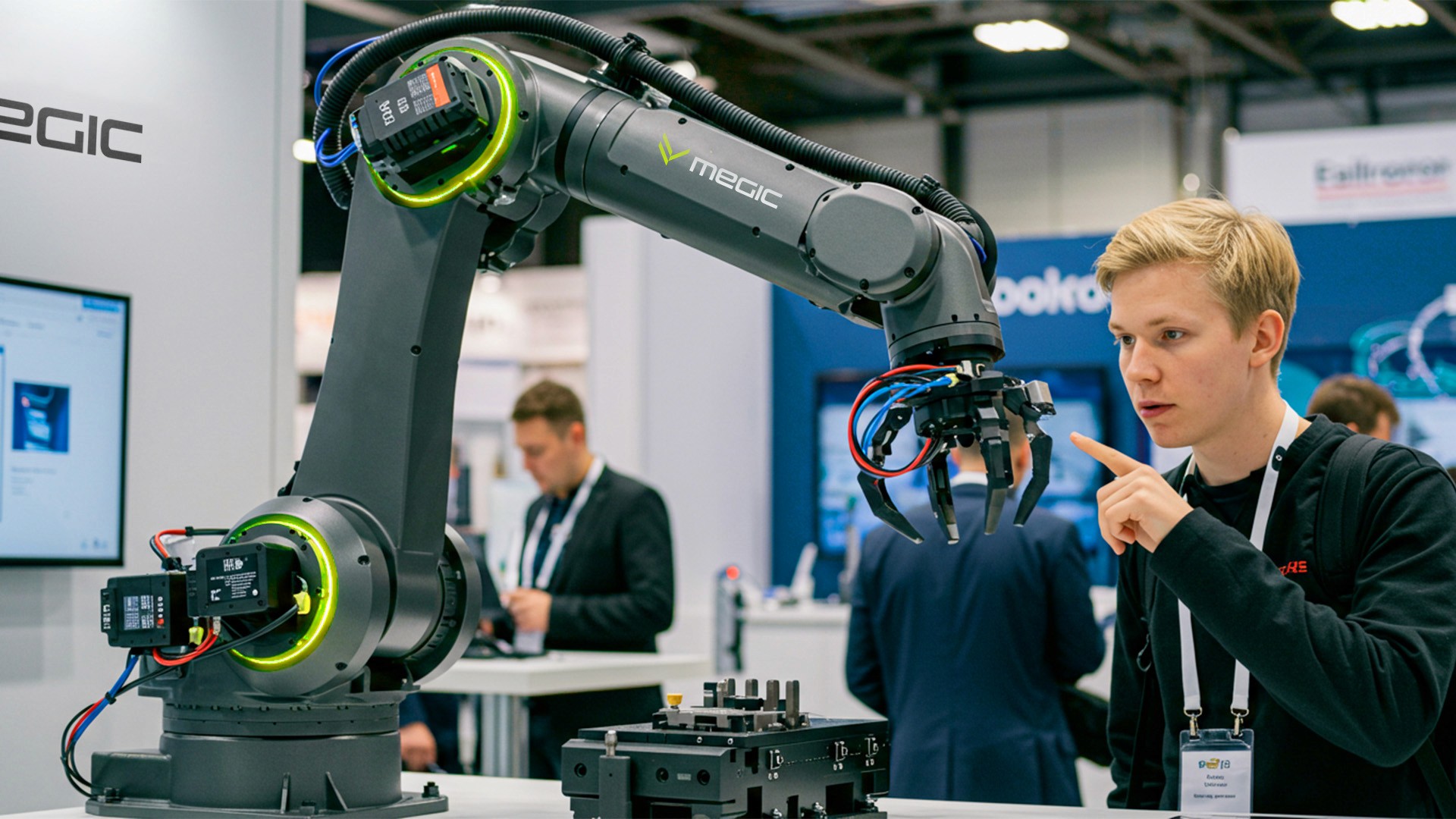
Phase 2: Trade Application (Week 3-4) - Designed and produced booth graphics, product signage, and promotional materials for upcoming Automatica trade show in Munich (one of Europe's largest robotics exhibitions).
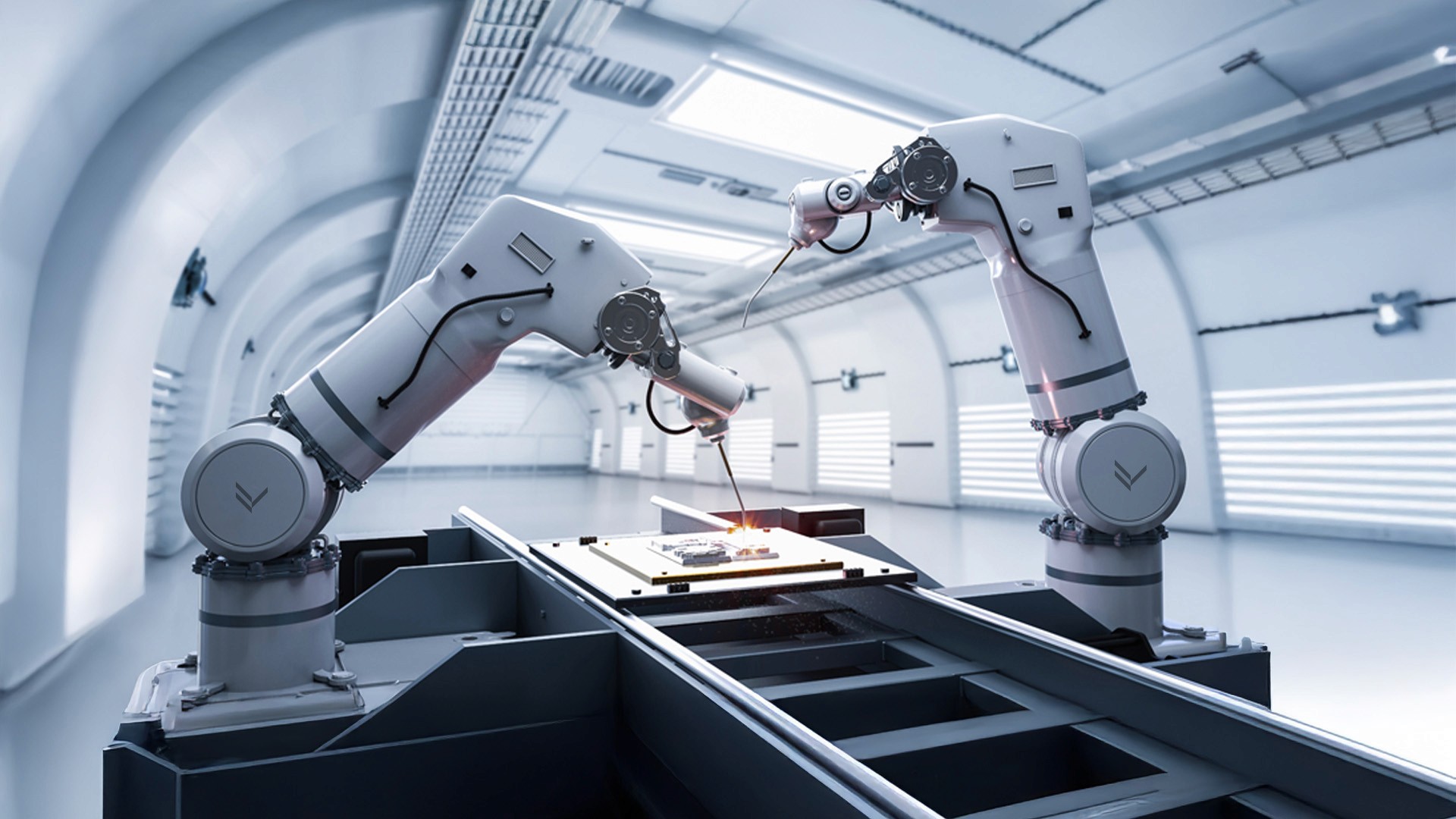
Phase 3: Product Integration (Week 5-6) - Applied brand elements to physical products via laser-etched badges, control panel UI updates, and packaging redesign.
Trade Show Performance
The rebrand's first major test was Automatica 2024. MEGIC's booth featured floor-to-ceiling lime and black graphics with the new logo prominently displayed. Product demonstrations used the new naming system.
Measurable outcomes:
Booth traffic increased 47% compared to previous year's attendance (measured via badge scans)
Lead capture improved from 68 qualified leads (2023) to 114 qualified leads (2024)
Unsolicited feedback: 12+ attendees specifically mentioned the "distinctive" booth design
One major manufacturing client cited the "professional rebrand" as a factor in choosing to request a proposal