VISUAL IDENTITY
2023
For an accessible and human renewable energy
Anemos is a renewable energy startup founded in 2023, focusing on wind farm development and green energy distribution across Southern Europe. As a new company entering a market dominated by established utilities with decades of brand recognition, Anemos needed to establish credibility quickly while differentiating from both legacy energy companies and fellow green energy startups.
The founders—three engineers with backgrounds in wind turbine technology—had technical expertise but no brand presence. Their initial branding consisted of a generic wordmark in a standard sans-serif font. When pitching to municipal governments and corporate clients for energy contracts, they were losing to competitors who simply "looked more established."
The challenge was positioning: Anemos needed to appear credible and trustworthy (essential for energy infrastructure contracts) while also feeling modern and approachable (to differentiate from old-guard utilities). The brand had to work equally well on a PowerPoint presentation to city officials and on safety equipment worn by field technicians installing wind turbines.
Project Details:
Role: Brand Identity Designer (contract through design agency)
Timeline: 3 months (Jan - Mar 2023)
Collaboration: Worked with agency creative director and Anemos founding team
Deliverables: Logo system, brand guidelines, corporate stationery, safety equipment branding, signage design
The Objectives:
Establish credibility: Create a visual identity that communicates reliability and technical competence
Enable differentiation: Stand out from both legacy utilities and green energy competitors
Build team unity: Give the growing workforce (25 employees at project start) a sense of professional identity
Support scalability: Design a system that works from business cards to building signage
I analyzed the visual identities of 20 energy companies operating in Anemos's target markets (Greece, Italy, Spain):
Legacy utilities pattern:
15/20 used blue color palettes (signaling trust/reliability)
12/20 incorporated literal imagery (lightning bolts, power lines, turbines)
Most used all-caps typography in heavy sans-serif fonts
Visual language emphasized stability and scale, often felt corporate and impersonal
Green energy startups pattern:
Heavy use of leaf motifs, earth tones (greens, browns)
Softer, organic typography
Some felt "too friendly"—lacked the authority needed for B2B/government contracts
Opportunity identified: The market split between "corporate blue" (traditional) and "eco green" (startups). A modern approach using green strategically—not pastorally—could differentiate while maintaining authority.
Stakeholder Workshops
Conducted two half-day brand strategy sessions with Anemos founders and key employees (head of operations, lead engineer, business development manager):
Brand values identified:
Accessibility: Making renewable energy available to communities, not just corporations
Transparency: Clear, honest communication about capabilities and pricing
Human-centered: Energy infrastructure serves people—not abstract environmental goals
Innovation: Embracing new technology and approaches
Key insight from workshop: The name "Anemos" (Greek for "wind") was chosen deliberately. The founders wanted to honor Mediterranean heritage while emphasizing their primary technology (wind turbines). The brand needed to connect this name to tangible energy output.
Target Audience Research
Anemos had two distinct audiences requiring different positioning:
Primary (B2B/Government): Municipal governments and corporate sustainability officers
Need: Credibility, technical competence, financial stability
Decision criteria: Track record, reliability, pricing
Typical age: 35-55, conservative risk tolerance
Secondary (Workforce/Community): Engineers, technicians, local communities near wind farms
Need: Pride in mission, modern identity, approachability
Decision criteria: Company culture, environmental impact
Typical age: 25-45, values-driven
The brand needed to speak to both without alienating either.
Strategic Direction
Based on research, I developed positioning centered on "modern energy infrastructure":
Brand Positioning: "Accessible renewable energy"—emphasizing that green energy should be attainable for all communities, not luxury or niche
Visual Strategy: Use vibrant green as a differentiator but ground it with strong geometric forms and professional typography. Avoid pastoral/organic imagery in favor of clean, technical aesthetic.
Tone: Confident but approachable—professional without being corporate, innovative without being flashy
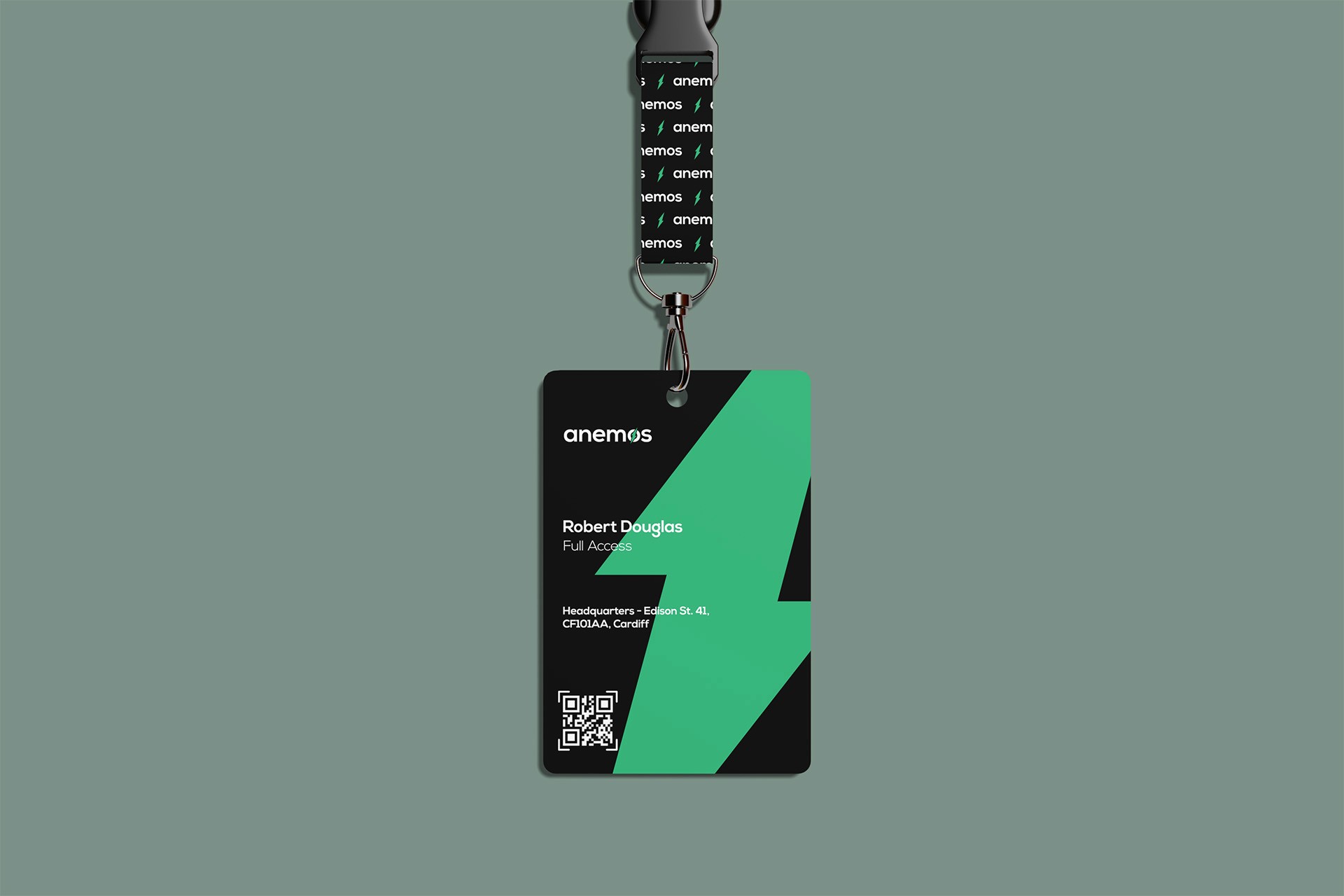
I explored three conceptual directions:
Direction 1: Turbine Abstraction Geometric interpretation of wind turbine blades forming an "A." Feedback: Too literal, felt like every other wind energy company.
Direction 2: Wind + Energy Flow Abstract flowing lines suggesting movement and electricity. Feedback: Too soft, lacked the structural clarity needed for credibility.
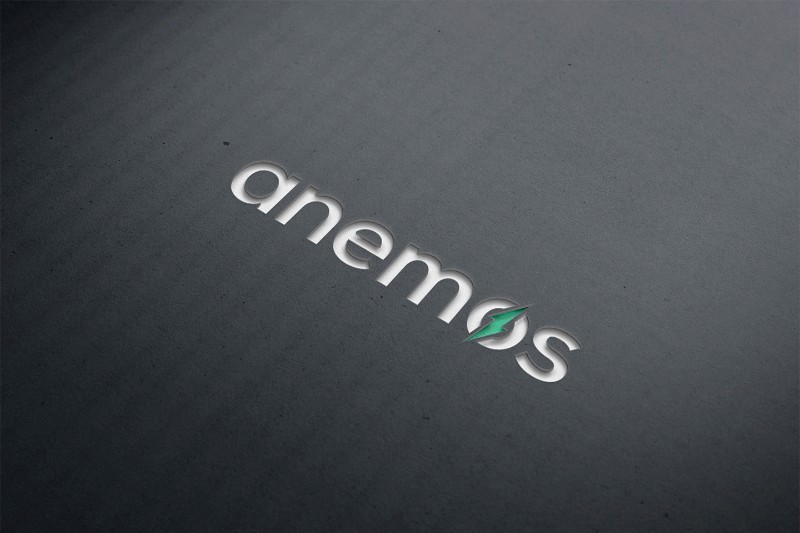
Direction 3: Integrated Symbol-Wordmark Lightning bolt integrated into the letter "o" in lowercase wordmark. This direction resonated strongly—it connected wind (circular form) directly to energy output (lightning bolt).
I developed Direction 3 into the final identity. Key design decisions:
Typography choice: Selected a geometric rounded sans-serif (customized from Nunito) for the wordmark. The rounded terminals create approachability while maintaining clean geometry needed for professional contexts. Lowercase letters feel more conversational than aggressive all-caps used by competitors.
Symbol integration: The lightning bolt lives within the negative space of the "o"—not as a separate mark but as an inseparable part of the wordmark. This creates a unique, ownable asset that's difficult to replicate.
Refinements made:
Adjusted letter spacing for improved readability at small sizes
Weighted the lightning bolt carefully—too heavy looked aggressive, too light disappeared at distance
Created outlined version for embroidery on textiles (filled version would be too small on polo shirts)
Color Palette Strategy
Developed a distinctive palette that breaks category norms:
Primary Colors:
Volt Green (#00FF7F): High-energy, vibrant green that signals innovation and environmental focus without being pastoral. Named "Volt Green" to emphasize electricity over nature.
Carbon Black (#0A0A0A): Deep black for text and grounding elements. Provides industrial anchor and maximum contrast.
Supporting Colors:
Slate Gray (#475569): For secondary text and backgrounds
Pure White (#FFFFFF): For negative space and high contrast applications
Strategic rationale: The vibrant green is intentionally electric/artificial rather than natural green. This distinguishes Anemos from "eco" startups while still signaling environmental focus. The stark black/green contrast creates maximum visibility—critical for safety equipment and outdoor signage.
Application System Design
Extended the identity to critical touchpoints across three categories:
1. Corporate Applications:
Business cards, letterhead, presentation templates
Website design direction (visual guidelines for web team)
Proposal/pitch deck templates for client presentations
Design approach: Clean, generous white space, green used sparingly as accent. Professional enough for government contracts while maintaining modern edge.
2. Safety Equipment & Workwear:
Hard hats with logo application (vinyl decal specification)
High-visibility safety vests (reflective tape placement with logo)
Polo shirts for office/client-facing staff
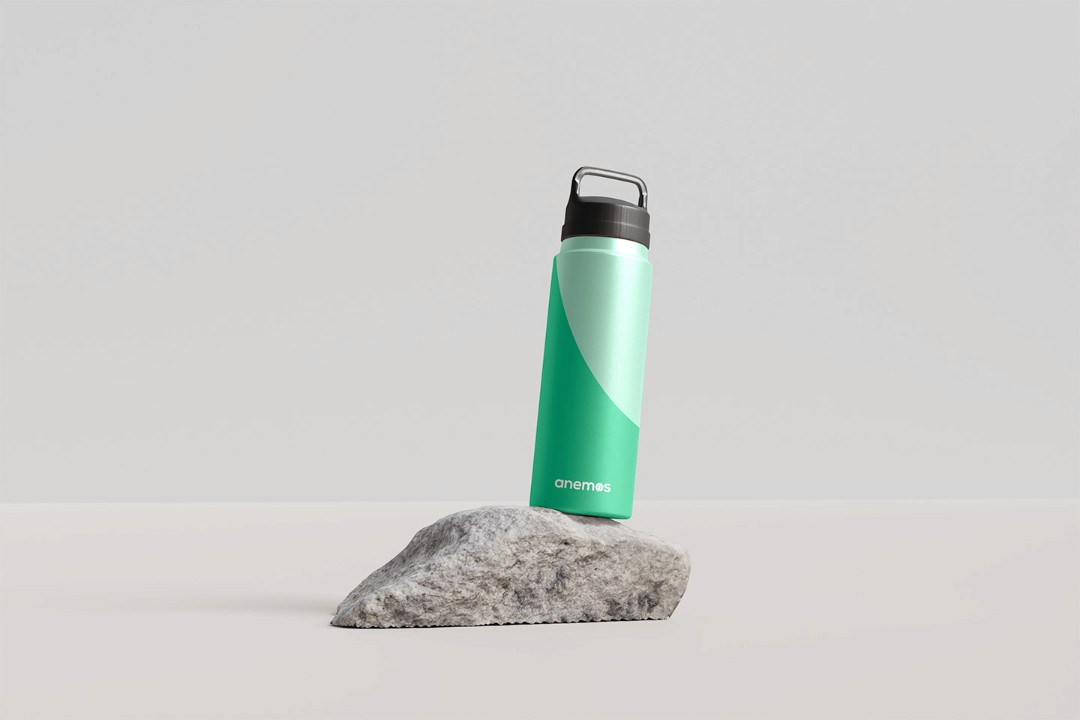
Insulated water bottles for field teams
Design approach: Logo placement needed to be visible but not overwhelming. For safety gear, I specified outlined version of logo to meet visibility standards while maintaining brand recognition.
3. Environmental Graphics:
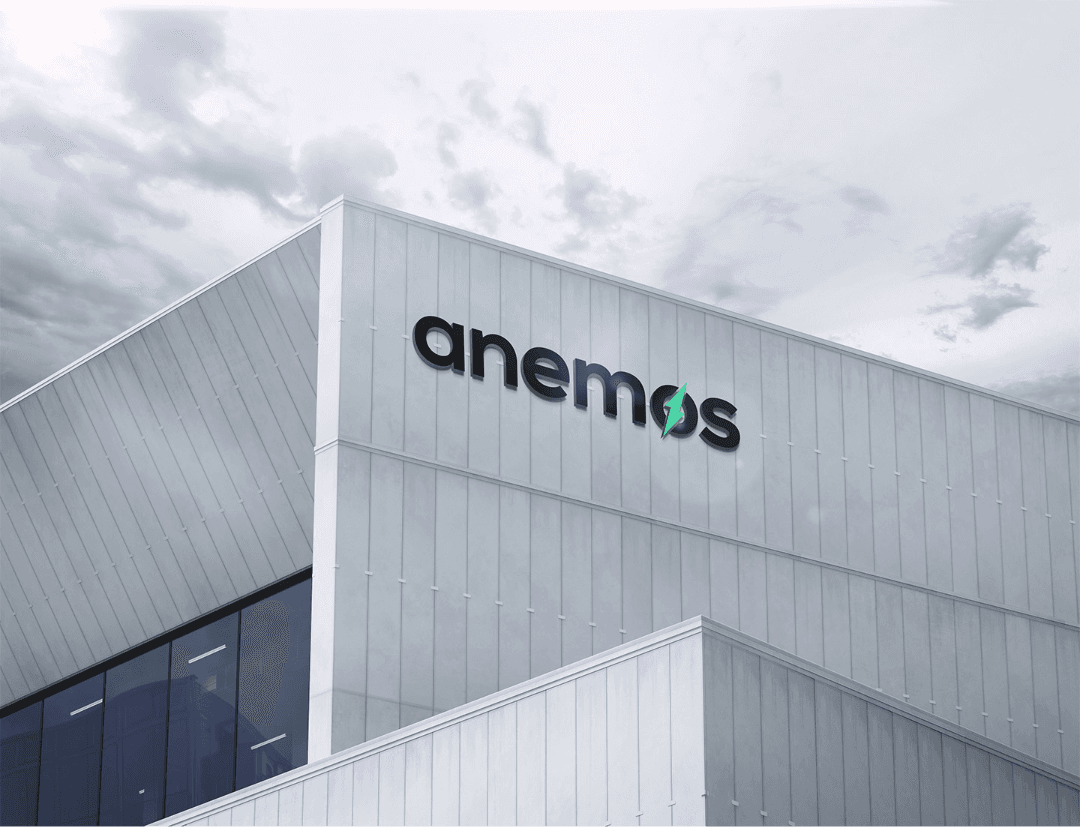
Headquarters building signage (3D lettering specification)
Site signage for wind farm installations
Vehicle graphics for company trucks/vans
Design approach: Bold, architectural application. The geometric logo reads clearly from distance and in various lighting conditions.
Brand Guidelines Document
Created a 28-page brand book documenting:
Logo usage rules (clear space, minimum sizes, incorrect usage examples)
Color specifications (Pantone, CMYK, RGB, HEX)
Typography system (primary and secondary fonts, sizing hierarchy)
Application examples across all touchpoints
Tone of voice guidance for written communications
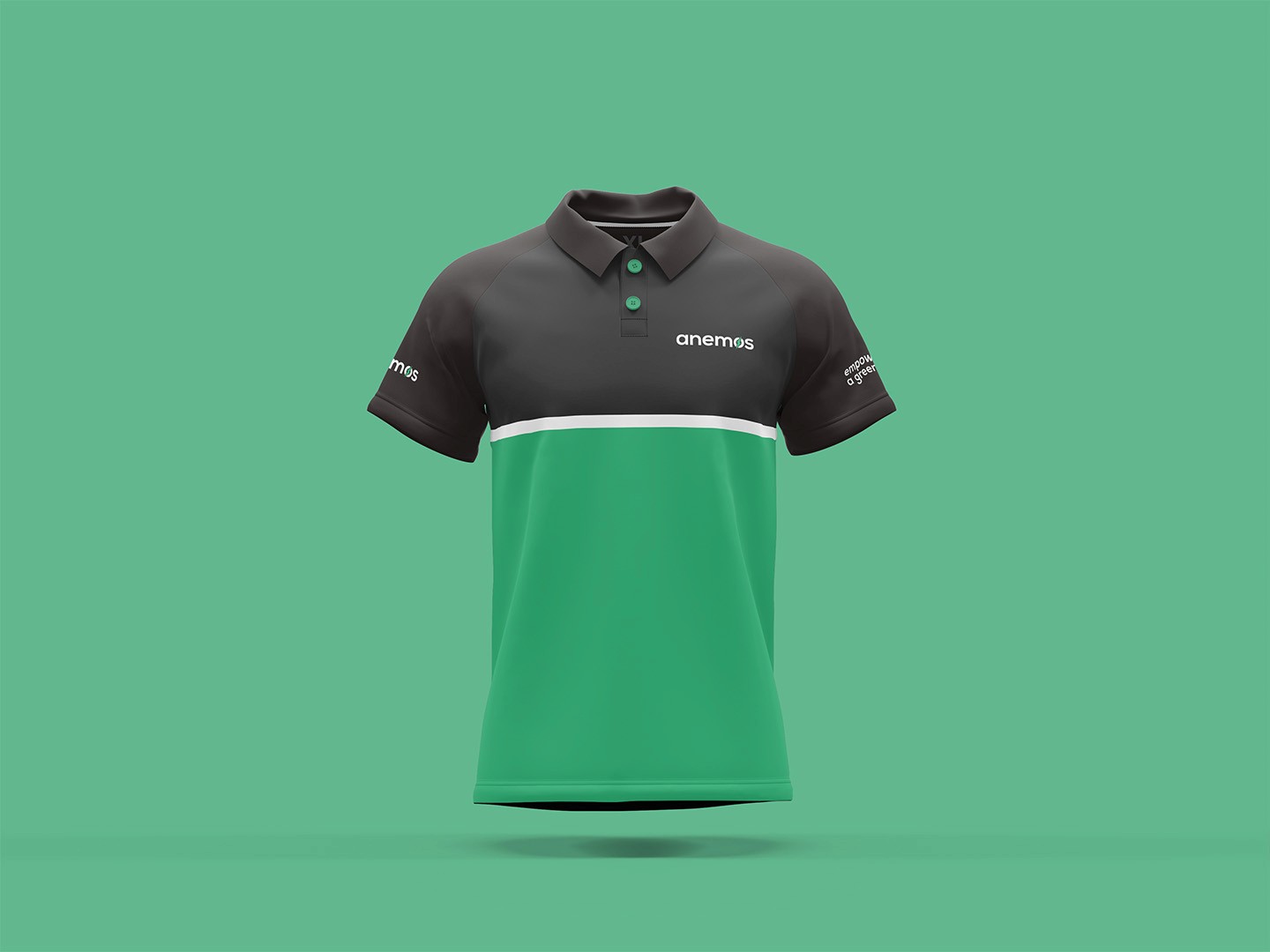
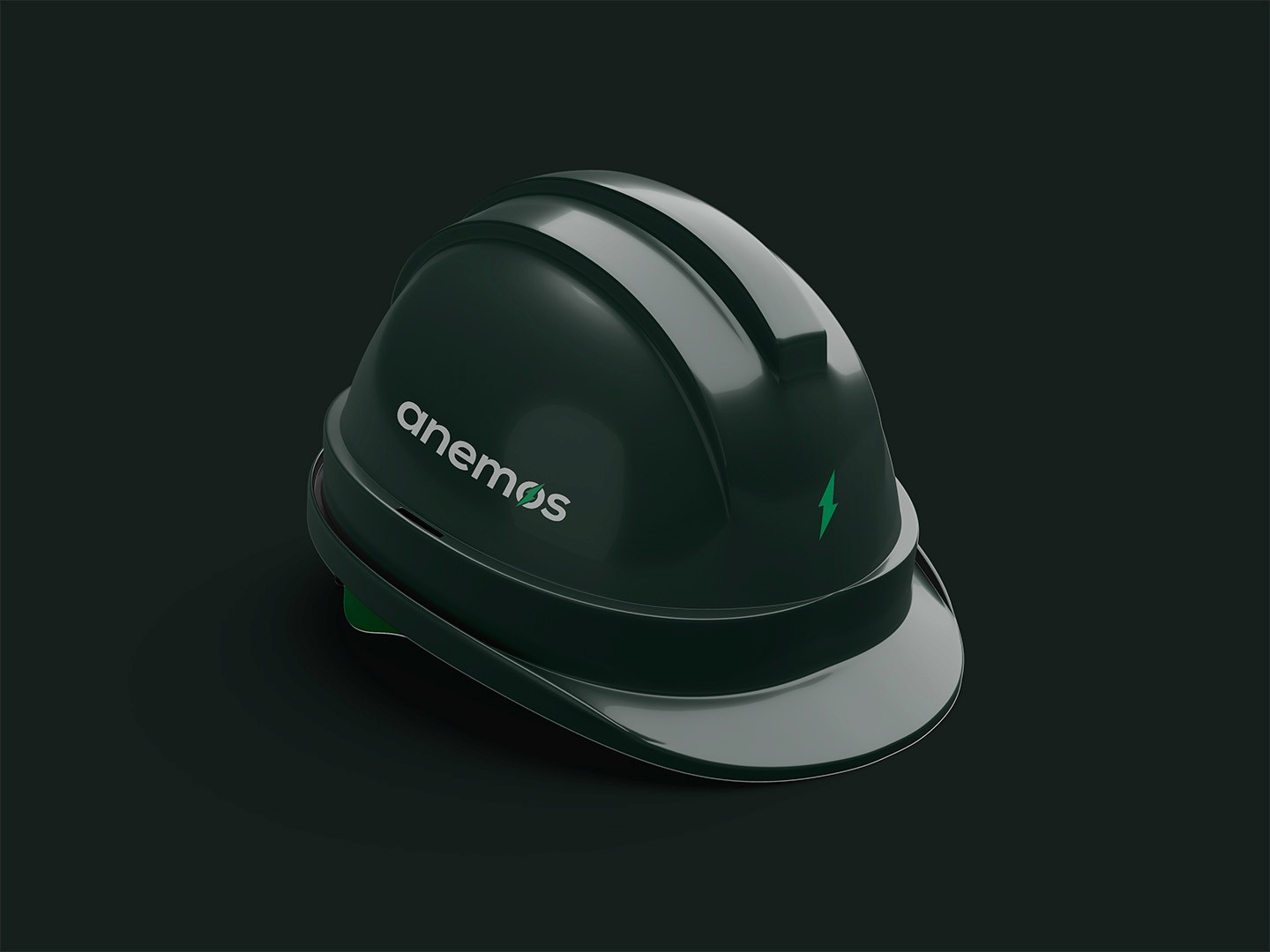
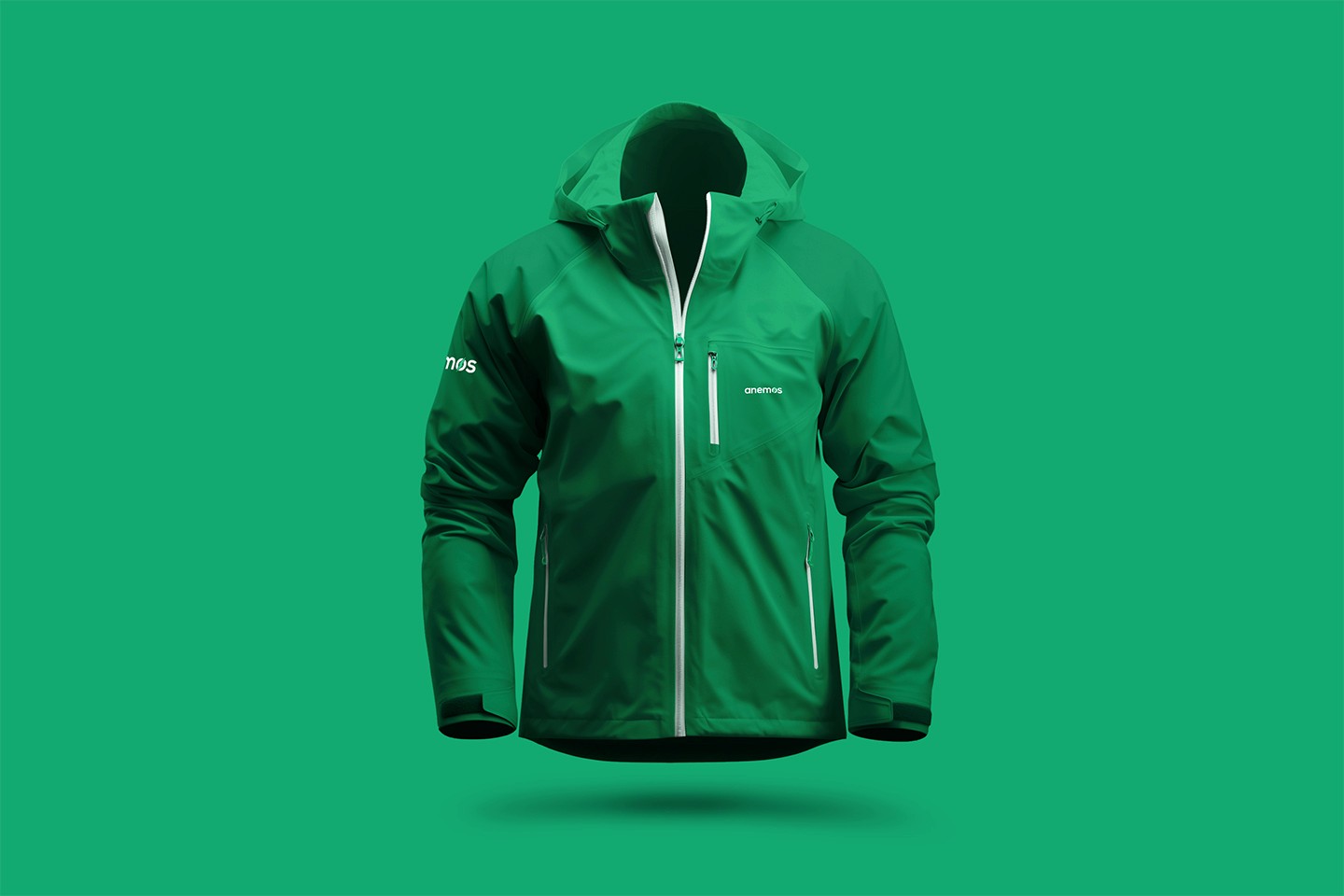
The rebrand launched over 6 weeks:
Phase 1: Digital Foundation (Weeks 1-2) Updated website, email signatures, LinkedIn company page, and digital proposal templates. Created immediate visibility in ongoing client communications.
Phase 2: Corporate Materials (Weeks 3-4) Printed new business cards, letterhead, and presentation materials. Ensured all client-facing materials were updated before major pitch to Athens municipality.
Phase 3: Physical Brand (Weeks 5-6) Installed building signage at headquarters, distributed branded safety equipment and workwear to field teams. Completed vehicle wraps for company fleet.
Business Impact
While attributing business outcomes solely to branding is difficult, Anemos leadership reported several positive changes post-rebrand:
Client perception shift:
Won Athens renewable energy contract (€2.8M, 3-year term) one month after rebrand launch. Client specifically mentioned "professional presentation" in selection feedback.
Business development manager noted prospects no longer questioned company legitimacy—the professional identity signaled established business.
Recruitment benefits:
Applications for engineering positions increased 35% in the quarter following rebrand (compared to previous quarter)
Several candidates mentioned "modern company culture" as attraction factor in interviews
Internal cohesion:
Employee survey (conducted 2 months post-rebrand, n=32 employees): 87% agreed "I feel proud to wear/display company branding"
Field teams reported positive community reactions to branded safety gear at installation sites
Real-World Performance
The identity has been tested across diverse applications:
Visibility validation: Building signage is visible from 100+ meters, vehicle graphics are clearly readable in traffic—meeting functional requirements for outdoor applications.
Durability: Safety equipment branding (hard hats, vests) has held up through 6+ months of field use with minimal wear.
Scalability: Logo maintains recognition from business card size (35mm wide) to building signage (3 meters wide).